ΑΝΑΛΥΣΕΙΣ
Oil Price By Cyril Widdershoven - May 16, 2026
The Xi–Trump summit failed to deliver any concrete plan to stabilize the Iran crisis or reopen the Strait of Hormuz, exposing deep U.S.–China divisions over energy security and maritime stability.
Oil and shipping markets remain on edge as Hormuz disruptions increasingly look structural rather than temporary, with insurers, shipowners, and traders losing confidence in U.S. security guarantees. The world is entering a fragmented new trade order where maritime access and energy flows are becoming tied to geopolitical alignment instead of open global markets.
Even though the Xi–Trump summit in Beijing was supposed to project stability, the outcome was clearly the opposite. In real terms, the meeting could ultimately be remembered as the moment the world began to understand that there is no viable great-power strategy to contain the Iran war or to reopen the Strait of Hormuz. The latter will have a long-lasting, debilitating effect on the stability of global shipping and energy markets. Even when taking into account all the choreography, ceremonial handshakes, and triumphant statements, the meeting produced no significant concrete result on the single issue now most directly threatening the global economy. The escalating confrontation around Iran and the paralysis in the Strait of Hormuz still hangs in the balance between Washington and Tehran. The silence at present is deafening.
As foreseen, Trump has left Beijing claiming that “a lot of problems” had been solved and insisting that Chinese President Xi Jinping agreed the Strait of Hormuz “must remain open.” However, no visible results are being presented, such as a framework, roadmap, timetable, or joint initiative. Both sides failed to support a coordinated maritime-security mechanism. Also, even more important, no diplomatic breakthrough with Tehran has materialized. It will also need to be addressed that no agreement on energy stabilization was published.
The summit’s outcome is even more dangerous, as Washington and Beijing are no longer capable of acting jointly, which threatens global shipping stability. The Strait of Hormuz, the central artery of the global hydrocarbon economy, remains vulnerable amid ongoing military tensions and disrupted traffic.Related: Oil Prices Surge as Hormuz Shutdown Keeps Supply Fears Alive
Expectations were high that the Beijing summit would produce at least a minimal framework to lower tensions. The stark reality of Washington and Beijing's deepening division over Iran now underscores the growing risk of geopolitical rivalry affecting global stability, which should alert the audience to potential crises.
Washington wants China to pressure Tehran harder, to reopen Hormuz fully, and limit Iranian escalation. Beijing, however, seems to want only stability without sacrificing its strategic relationship with Iran. The ultimate result is now paralysis. Maybe it is even worse; both parties now publicly pretend this paralysis does not exist.
Trump’s claims that Xi had offered help and supported reopening Hormuz have been denied or avoided by Chinese officials, highlighting the disconnect. This discrepancy reveals the core reality of the summit: there was no actual strategic alignment, and both sides are maneuvering to exploit the crisis while publicly pretending cooperation exists.
Oil markets are becoming nervous again, as the perceived optimism was a fallacy. Crude oil prices are again climbing, and tanker markets remain volatile, highlighting that Hormuz is no longer facing temporary disruption but is becoming structurally unstable-an alarming development for global trade security.
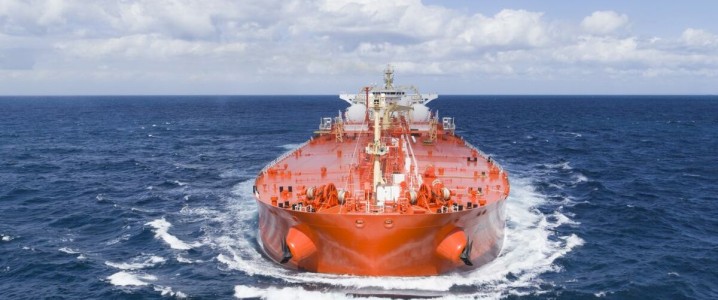
Maritime risk calculations have been altered by the Iran war, as even during temporary ceasefires or announced reopenings, shipowners and insurers remained hesitant to resume normal transit patterns. “Operation Project Freedom”, which is a clearly failed American naval escort initiative, has been demonstrating it also. Shipowners and insurers find American security guarantees insufficient. This is a very uncomfortable truth for the Trump Administration: the United States can still project military power into the Gulf but cannot guarantee commercial confidence. For the future, this will be a critical distinction.
Shippong markets all operate on predictability, insurability, and confidence. Even limited disruption destroys those foundations; Hormuz is doing it in real time. The Xi–Trump summit did nothing to change this.
From an outsider's perspective, the summit has worsened the strategic ambiguity surrounding Hormuz. While Trump stated that Xi pledged not to arm Iran and supported keeping the strait open, Chinese-linked vessels are permitted by Iran to transit. The perception, accurate or not, is clearly that China is negotiating special access arrangements with Tehran, while the global international shipping system remains constrained. For non-Chinese parties, that is deeply alarming.
If Hormuz evolves into a selectively accessible corridor, totally shaped by geopolitical alignment, global trade will face a new reality. One in which energy flows, insurance structures, and maritime pricing mechanisms reflect political relationships rather than open-market dynamics. What is even more worrying is the possibility that the world is already in this situation.
Iran’s newly established Persian Gulf Strait Authority and emerging transit-control mechanisms suggest Tehran is actively institutionalizing differentiated maritime access. The Trump Administration, however, continues to assert that it will maintain elements of its naval blockade strategy while demanding that China “do more.” This reality means there is NO de-escalation, but a militarization and politicization of one of the world’s most critical maritime chokepoints.
Geopolitically, this is even more dangerous. The summit did not focus solely on Iran, but also on Taiwan. The Chinese leader Xi warned openly that mishandling Taiwan could lead to “clashes and even conflicts.” For maritime and global trade, this means they are no longer confronting isolated crises. Instead, global trade and shipping are facing unprecedented instability across Hormuz, the Red Sea, and East Asia.
It should be clear that the assumption on which the modern global trading system was built, that global maritime arteries are open or protected by American naval dominance and a relatively cooperative global order, has collapsed. The Xi-Trump summit now shows how unprepared global leadership is for this transition.
At the same time, Europe is still sleepwalking due to a lack of strategic clarity. While European economies remain heavily exposed to Hormuz through LNG imports, refined products, and broader energy-market pricing, all seem to be trapped between dependence on American security guarantees and economic dependence on Chinese trade and Gulf energy flows. The Old Continent still lacks a coherent European maritime-security doctrine.
Asian economies are also increasingly worried, as all depend on Gulf energy imports. Still, even after months, none of them are capable or willing to establish an independent maritime-security framework without triggering broader geopolitical escalation. It seems there is a severe strategic drift.
And markets hate drift.
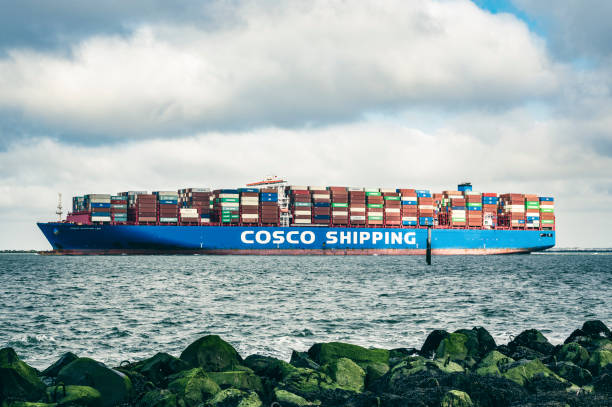
All, but especially the maritime sector, start to view the current environment not as a temporary geopolitical shock but as the beginning of a structurally fragmented trading system. The results are clear, as container shipping already faces potential U.S.–China decoupling pressures. In tanker markets, access to select chokepoints is limited, while LNG markets remain extremely tight. Overall, shipowners are reassessing routing strategies, while ports are facing increasing geopolitical scrutiny. The Beijing summit did nothing to reverse any of these trends; it only reinforced them.
The most important thing, again, was what was not said. It is surprising and worrying that there was no serious discussion of a multinational Hormuz stabilization force. Neither party addressed sanctions-relief mechanisms or a joint maritime-insurance framework. China and the USA were also unable to detail a shipping-security architecture. This again reiterates the view that an extreme, deep strategic distrust dominates the U.S.–China relationship.
The Trump Administration views every crisis through the lens of competition with Beijing, while the latter increasingly views American initiatives as attempts to preserve American strategic dominance. Hormuz is no longer an energy-security crisis but another arena of great-power rivalry. For shipping and energy markets, this is dangerous.
The result of the situation, that maritime access becomes increasingly conditional on geopolitical alignment, will be that global trade will gradually fragment into competing spheres. Neutrality in that situation will be impossible. Energy markets (and their main transporter, shipping) will cease to function as a unified global marketplace.
The irony of the summit is brutal, as it was meant to reassure markets that the world’s two largest powers could still cooperate during a crisis. After Trump’s plane left, it is now clear that both sides may now be too strategically divided to manage systemic maritime instability together. The ultimate fear now emerging is that Hormuz may never fully return to its pre-war status.
By Cyril Widdershoven for Oilprice.com

yiota
Author’s Posts
-
Iraq’s Oil Lifeline Reopens — But Can Baghdad Trust Turkey for Even One Year?
آب 11, 2026
-
Central Asia and Azerbaijan Extend Cooperation Across the Caspian
The Central Asia Times, 11 Augu...
آب 11, 2026
-
Ποιοι Είμαστε
της Παναγιώτας Παπαρούνα
Ο μεγάλος ευρασιατικός μας κόσμος!
Της Παναγιώτας Παπαρούνα
Ιράν: Ο Μοτζτάμπα Χαμενεΐ προχώρησε σε αλλαγές κορυφής – Ετοιμάζεται για παρατεταμένη σύγκρουση