ΑΝΑΛΥΣΕΙΣ
Like Michael Corleone, Iraq’s Militias Seek Legitimacy
Iraqi militias have evolved from armed groups into powerful political and economic actors, embedded within the state and controlling key sectors.
They generate revenue through contracts, energy networks, finance, and illicit activities, reducing reliance on Iran while expanding domestic influence. U.S. pressure has had limited impact, as militias now form a core part of Iraq’s political structure, making reform or disarmament highly complex.
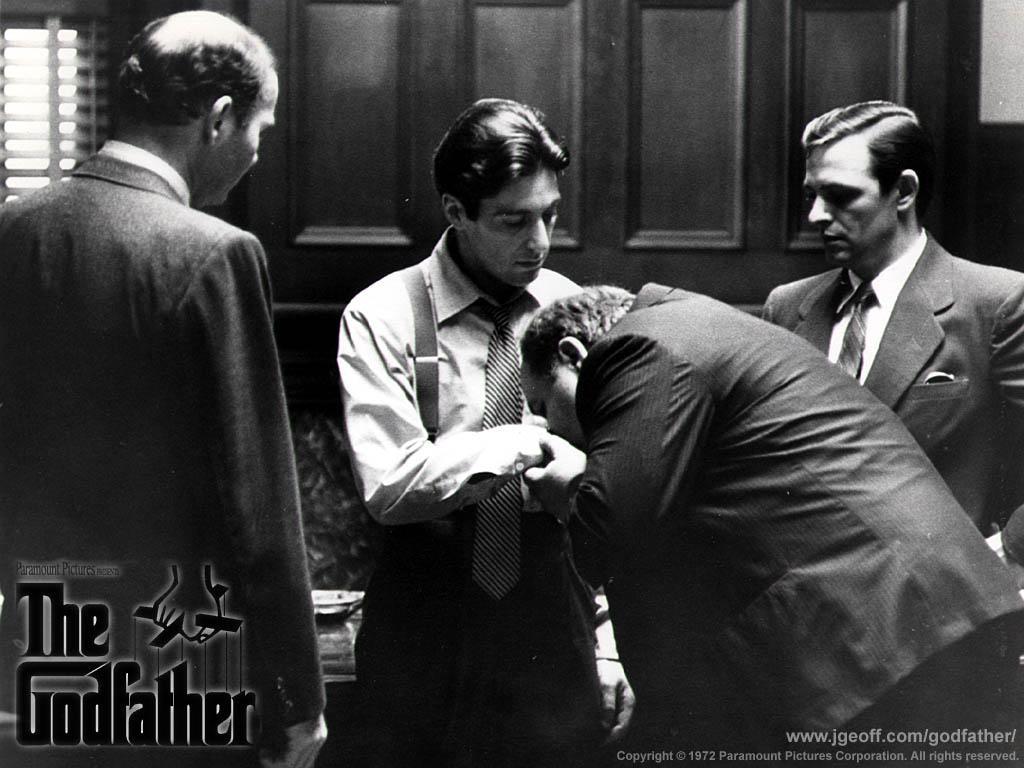
Saddam Hussein’s favorite movie was reportedly “The Godfather.” A central theme in the story is the attempts of Michael Corleone, the godfather, to turn the Corleone Family into a legitimate business. Many of today’s leaders of Iraq’s Iran-aligned militias (and their families) were persecuted by Saddam’s security services and could not enjoy the luxury of foreign films, but they would understand Michael’s dilemma.
The “founding charter” of Iraq’s militias is arguably Coalition Provisional Authority Order Number 2: Dissolution of Entities, which, in May 2003, dissolved, but did not disarm, Iraq’s military and security services. Many of the 400,000 newly unemployed troops joined the anti-American resistance and later joined al-Qaeda if they were Sunni Muslims. The Shia resistance to the Americans was initially unified under the Mahdi Army. The Mahdi Army and Al-Qaeda fought each other as well, which peaked in the 2006-2007 civil war.
Iraq’s first militia, the Mahdi Army, was founded by Muqtada al-Sadr after the U.S. invasion in March 2003. It was large and disorganized and, in 2006 Prime Minister Nouri al-Maliki, an opponent of the Sadrists, decided to fragment the Mahdi Army, and Operation Charge of the Knights was his tool. Helpfully, Asa’ib Ahl al-Haqq (AAH) split from the Sadrist movement in 2004 and “acted as a military force for al-Maliki to help implement his process of centralizing and consolidating power between 2011 and 2014.” Amid concerns that the formal security services were incapable or unwilling to preserve the newly established political system that had given the Shia unprecedented political representation, AAH and other groups began entrenching themselves in the power structure.
Related: Iraq Turns to Risky Overland Routes as Oil Exports Collapse
The role of what were informal militias was legitimized in June 2014, during the Islamic State’s invasion, when Ayatollah Ali al-Sistani issued a “defensive jihad” fatwa (an obligation carried out by those able to fight) that mobilized fighters who became the Popular Mobilization Forces (PMF). (Al-Sistani has since called for state control of the militias, as has al-Sadr.) In June 2014, al-Maliki formed the PMF by “institutionalizing” pre-existing and predominantly Shia militias that were fighting the Islamic State. The PMF was large and not well-organized, so AAH officers constituted the bulk of the PMF leadership.
In February 2016, Prime Minister Haidar al-Abadi incorporated the Popular Mobilization Forces (PMF) as an “independent military formation” in Iraq’s security forces and prohibited political work by its members.
In the 2018 elections, some militias participated in the political process for the first time, benefiting from their role in the victory against ISIS, which gave them a political role in addition to their security tasks, and marked the beginning of their dual roles that sometimes conflict with the interests of the state.
In August 2025, U.S. pressure (and internal divisions in Iraq) caused Baghdad to withdraw legislation that would formally integrate the PMF into Iraq's armed forces under unified military command. Washington’s concern was that the legislation would legitimize groups it considers terrorists while creating a parallel force separate from the regular Iraqi military that has ties to the U.S. military.
While the politicians were otherwise occupied, many of the militias extended into financial networks and commercial enterprises and grew economic influence within Iraq’s economy and society, all of which supported their social activities and political work, and reduced reliance on outside, i.e., Iranian, money.
The militias have started diversifying funding sources beyond external sponsors. This allows them to claim they are free of obligations to Iran, and it may also suit Tehran, as U.S. government pressure may cause fluctuations in funding streams to the militias, especially those closest to Iran, like Kata’ib Hezbollah, Asa’ib Ahl al-Haqq, and Harakat al-Nujaba. Some militias have sought local revenue streams that include operations that resemble financial services and lending that generate money for the group’s activities and patronage networks, helping to sustain their social and political influence.
Militia leaders are entering commercial markets for financial gain and wealth accumulation and can use their power to control lucrative sectors or extract rents from local economies. Some leaders are described as transforming themselves into economic stakeholders — sometimes compared to local business elites - though this will cause friction with local businessmen who may have to accommodate new “partners,” so will expect favorable political intervention in turn.
Militias have influence in the allocation of government resources and contracts as they are formally part of the PMF under Iraqi law. They may channel government resources, public contracts, and budget allocations toward affiliated firms or patronage networks. This de facto economic leverage often blurs the lines between state functions and militia interests. While this is not “business” in a conventional private-sector sense, it gives these factions significant control over economic flows and opportunities within Iraq’s economy.
How do the militias make money?
Construction and government contracts. The U.S. opposed the legislation that legalized the PMF's economic interests, including the powerful "Al-Muhandis General Company," which operates as the PMF's main business and financial arm. It has become a key tool for militias to access public contracts, channel state funds, and expand their economic influence across Iraq's reconstruction and infrastructure sectors. According to the U.S. Department of the Treasury, the Muhandis General Company, controlled by Kata'ib Hizballah, uses a subcontracting method to divert funds from Iraqi government contracts. As of 2025, it also has a contract with the Iraqi government for undisclosed real estate projects.
Telecommunications and technology. Militia-linked firms have made a play to gain exclusive control of 5G mobile communications service in Iraq. The government of Prime Minister Mohammed Shia' al-Sudani revealed the extent of militia penetration of the telecom sector by awarding sensitive telecoms contracts to a sanctioned militia economic conglomerate, while also channeling lucrative 5G mobile telephony licenses exclusively to militia businessmen.
Energy and smuggling. PMF-linked groups are embedded in Iraq's fuel economy, from smuggling subsidized petrol across borders to controlling oil depots and electricity contracts. These activities generate significant revenue and give militias leverage over daily life, since Iraq's chronic fuel and power shortages make control of supply chains a powerful political weapon.
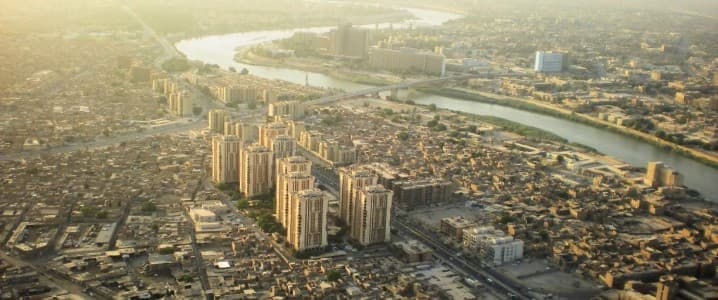
Real estate and money laundering. Baghdad and other major Iraqi cities are witnessing a surge of ambitious real estate projects, upscale shopping malls, and luxury towers. But behind many projects stand a militia leader and a politician, with the title deeds and money left to financiers.
Banking and finance. Iraqi bank executives have been sanctioned by the U.S. for using their positions to benefit Iran’s Islamic Revolutionary Guards Corps (IRGC), Kata'ib Hizballah, and Asa’ib Ahl al-Haq — exploiting control over several Iraqi banks to generate revenue and launder money for militias and their Iranian backers.
Extortion and illicit revenue. Iraqi militias use shell companies to launder money, extort merchants, and impose informal "taxes" and fees on the entry of goods — earning an estimated USD11 billion annually. The Iraqi Centre for Strategic Studies estimates that corruption, mismanagement, and Iranian influence – the “militia economy” - have cost Iraq USD600 billion since 2003.
Broader Economic and Political Effects
Militias’ economic activities often intertwine with corruption and graft; critics argue they use economic leverage to advance their political power and undermine state institutions. Iraq ranks 136th out of 182 countries on the Transparency International 2025 Corruption Perceptions Index, but it has been improving since 2023.
Some militias maintain supply and logistics networks that can shade into illicit trade and smuggling, benefiting both their finances and their operational autonomy.
Militia involvement in the formal and informal economy has contributed to entrenching their social influence, especially in areas where state services are weak and militia patronage fills the gap. Extending the socio-political activity to Iraq’s tribes, which have no militias but control many votes, has increased their influence, though the partnership has not risen to the level of an official alliance.
Does the Iraqi public see the militias as Iran’s allies or legitimate, local political forces? There was some resentment towards the militias before the American attacks on the PMF at the start of the Ramadan War, but that has lessened. The militias may transition along several tracks: some members may join the Iraqi military or security services; senior officers may attempt politics; and others will manage the businesses to benefit party members by providing jobs and social benefits, and funding political activity. The ideal end state for the Iraqi militias, in their minds, may be a system like Iran, Pakistan, or Egypt, where the military has significant business interests.
Some of the militia leaders are probably thinking of their legacy and want to become a politician/businessman - an oligarch - and open the way for younger family or network members. Fighters do not always make good businessmen, so transitioning enterprise management to well-educated children and grandchildren may be the best way to preserve wealth.
The U.S. response
In May 2025, two U.S. legislators asked Secretary of State Marco Rubio to expand sanctions on Iranian-backed militias and designate the PMF, the Al-Muhandis General Company, and the Badr Organization (a Shia Islamist political party and paramilitary group) as Foreign Terrorist Organizations.
In July 2025, the U.S. State Department warned that Iraqi financial institutions — including the Central Bank of Iraq and Ministry of Finance — could face penalties if they continued budgetary funding of PMF units. The U.S. also reclassified four key factions from "Specially Designated Global Terrorist" to the more severe "Foreign Terrorist Organization" designation.
In April 2026, the Iraqi ambassador to the U.S. was summoned by the Deputy Secretary of State who “stressed the United States will not tolerate attacks on U.S. interests and expects the Iraqi government to immediately take all measures to dismantle the Iran-aligned militia groups in Iraq.” Washington subsequently sanctioned seven militia commanders “…responsible for planning, directing, and executing attacks against U.S. personnel, facilities, and interests in Iraq; and reportedly suspended Iraq’s access to U.S. dollars from oil sales to force Baghdad to form a government free of Iranian influence and to prosecute the perpetrators of drone attacks against U.S. diplomatic facilities. (The Central Bank of Iraq denied that currency transfers were stopped.)
If this is the start of a new pressure campaign following America’s preemptive strikes against the PMF since 28 February, it will likely fail as external pressure rarely works in Iraqi politics where influence comes through incentives, alignment of interests, and respect for internal balances, not coercion. When Washington misreads that, it creates space for others, including China, to offer respect and predictability rather than threats and disorder.
Iraq held parliamentary elections in November 2025, and complicating the formation of a governing coalition is that three militia-aligned parties (Sadiqoun Movement, Badr Organization, and Huquq Movement) won 51 seats, a significant share of the 185 seats held by the Coordination Framework, the dominant Shiite coalition in Iraqi politics. (The Iraqi parliament has 329 seats.) Many of the remaining seats belong to factions or leaders with strong PMF or Iran?aligned militia affiliations, even if not formally the political arm of a militia. According to local observers, the Coordination Framework can be described as a coalition whose majority is militia?aligned, making an estimate of around one hundred militia?linked members plausible based on composition and affiliations. The militias today form a “blocking third” in the parliament and can frustrate laws requiring a two-thirds majority.
The Americans may feel militias are a threat to the Iraqi state, but as Ameer Al-Auqaili notes, “Militias no longer threaten to overthrow the state because they have, in many ways, become the state. They control ministries, direct security forces, and dominate economic landscapes, using the ballot box to validate their existing power.” The militias require a symbiotic relationship with the formal manifestations of the state, i.e., the parliament, as the state is the source of revenue and legitimacy. The militias are now in a gray zone, and the legislation that the Americans frustrated was Baghdad’s attempt to extend the state’s authority over them.
If the new government passes legislation that puts the PMF fully under government control, that will strain relations with the Americans. However, Washington is in no position to complain about political parties that openly win power at the ballot box, especially while U.S. President Donald Trump fêtes a former al-Qaeda member who fought American forces in Iraq, and is now the unelected (transitional) president of Syria, at the White House.
Prime Minister al-Sudani observed that with the defeat of the Islamic State, there is no need for foreign troops in Iraq, and disarming the militias could start after the foreigners, i.e., the Americans, departed. That was originally planned for September 2025, though U.S. defense secretary Pete Hegseth says U.S. forces will be “hanging around” the region after a ceasefire with Iran.
The militias were enjoying financial and electoral success and, before the Ramadan War, were prepared to demobilize to defuse tensions with the U.S., but America and Israel have stalled progress toward demobilization.
Iraq has not yet formed a government – parliamentary elections were in November 2025 – and U.S. President Donald Trump declared he opposes al-Maliki’s nomination as prime minister. However, the Shia Coordination Framework, of which al-Maliki is a member, controls a significant share of the parliament, and the legislators are feeling hawkish after the U.S./Israeli attack on Iran, and the simultaneous U.S. attacks on the PMF at the start of the Ramadan War.
Joe Kent, former director of the Trump administration’s National Counterterrorism Center, worked closely with the Iraqi government, and noted of the attacks, “It seems like blind American ignorance. Someone convinced us that everything that is PMF is an Iranian proxy” and “this is their [U.S. military] chance to settle scores.”
Washington may continue its pressure campaign to maintain influence in Iraq by blocking
al-Maliki’s return to the Government Palace and supporting favored politicians by sanctioning competitors aligned with militias. The U.S. program will be marketed as “anti-corruption” or “counter-terror,” but the goal will be to nurture the careers of cooperating Iraqi politicians. But the militias aren’t going anywhere, and the Coordination Framework is seeking a truce between the militias and the U.S.
Thus, Iraqi militias engage in business-related and economic activities, which range from local financing schemes and financial operations to influence over contracts, government spending, and economic networks. Their economic roles are part of how they sustain themselves and project social and political power in Iraq today.
U.S. relations with Iraq are influenced by what Aroop Mukharji calls “The Meddler's Trap: “…a leader inadvertently creates a problem through military intervention, feels they can solve it, and values solving the new problem more because of the initial intervention. The inflated valuation is driven by a cognitive bias called the endowment effect, according to which individuals tend to overvalue goods they feel they own. A military intervention causes a feeling of ownership of the foreign territory…”
Addressing the problem of militias in Iraq requires that American leaders understand the militias’ complicated structure, taking into consideration the consequences of the Ramadan War which has galvanized anti-American sentiment; the dynamics of Iraq’s fragile socio-political condition; and their own biases that are shaped by the weight of over 4,400 dead American soldiers and opportunity cost of almost USD3 trillion, all caused by a fixation on non-existent weapons of mass destruction that spawned a war of choice that ruined the future of a generation of Iraqis. Otherwise, misguided attempts to reorganize Iraq’s politics will fail and will further distance Baghdad from Washington, jeopardizing the recent gains in U.S.-Iraq relations, and weakening the state Washington wants to deputize to “stand up to Iran,”
The Iraqis suffered most of the consequences of the reckless demobilization of 400,000 armed men in 2003, and responsible leaders in Baghdad intend to avoid repeating the Americans’ mistake of not providing a viable path for integration or transition of the militias.
Despite the Coordination Framework’s success in the recent election, an emerging cross-sectarian bloc recently assembled a two-thirds quorum to select Nizar Amidi (Patriotic Union of Kurdistan) as president of the republic, despite opposition from Masoud Barzani (Kurdistan Democratic Party) and al-Maliki, and may propel al-Sudani, a member of the bloc, to a second term as prime minister, ensuring continuity of al-Sudani’s reconstruction program. (The bloc includes Qais al-Khazali of the AAH, which has been designated a Foreign Terrorist Organization by the U.S. in 2020. Khazali was designated a Specially Designated Global Terrorist in 2019.)
And Iran hasn’t given up its influence campaign in Iraq: Brigadier General Esmail Qaani, the commander of the IRGC Quds Force, recently visited Baghdad for talks with militia leaders and the Coalition Framework. Qaani is a savvy operator, but he was tone deaf to irony when he decried “foreign interference” in Iraq’s selection of the prime minister.
So, the Americans have a dilemma: al-Sudani, a known quantity, may return as prime minister, and as a figure capable of balancing Iraq’s many interest groups, he can play a decisive role in the next phase of Washington’s involvement with Iraq and the region, but with increased authority that may collide with American intentions.
If Sudani keeps his seat in the Government Palace through a broad-based coalition that includes militia leaders, that effort may start to weaken corrosive sectarianism in Iraq, and that will ease American concerns about Iraq’s future stability. But will Washington “take the win” or will it make perfect the enemy of good enough?
By James Durso for Oilprice.com

yiota
Author’s Posts
-
Iraq’s Oil Lifeline Reopens — But Can Baghdad Trust Turkey for Even One Year?
آب 11, 2026
-
Central Asia and Azerbaijan Extend Cooperation Across the Caspian
The Central Asia Times, 11 Augu...
آب 11, 2026
-
Ποιοι Είμαστε
της Παναγιώτας Παπαρούνα
Ο μεγάλος ευρασιατικός μας κόσμος!
Της Παναγιώτας Παπαρούνα
Ιράν: Ο Μοτζτάμπα Χαμενεΐ προχώρησε σε αλλαγές κορυφής – Ετοιμάζεται για παρατεταμένη σύγκρουση