ΕΙΔΗΣΕΙΣ

Asian buyers are scrambling for oil supplies, relying on sanctioned Russian and Iranian crude, but these buffers are running out.
Wealthier nations like China and Japan are cushioned by large reserves, while poorer countries face shortages, emergencies, and austerity measures. With Hormuz still disrupted and alternatives limited, a deeper supply squeeze and rising prices are increasingly likely across Asia.
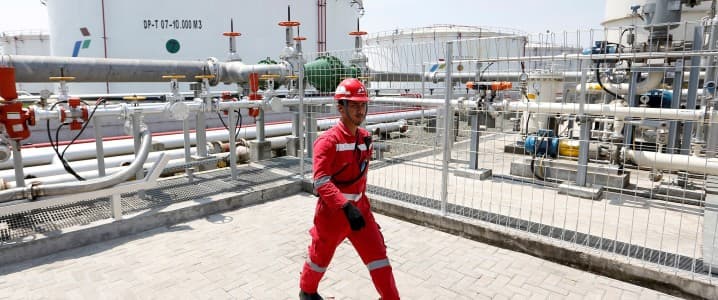
Asian countries have been buying all the oil they can get their hands on since the Strait of Hormuz shut down for business. Thanks to ample supply of seaborne crude oil, mostly consisting of sanctioned Russian and Iranian crude, the shock from the fallout of the war has been somewhat mitigated—but not for long. As that supply runs out, the shock is looming ever larger.
Iran closed Hormuz for traffic right after the United States and Israel bombed it on February 28. Since then, tanker traffic has been sporadic, sending international oil prices above $100, although reports about ceasefire talks and potential peace deals have done a surprisingly effective job of keeping a cap on prices. Meanwhile, however, the physical reality suggests things are not so well for the region, driving global demand growth in both crude oil and natural gas.
The poorer Asian nations have been the first to start running out of options. Because of limited financial resources, these nations have not been able to build the kind of oil reserve that their wealthier neighbors have now tapped to deal with the crisis. Several countries in Southeast Asia have begun implementing energy austerity measures, with the Philippines declaring a national energy emergency.
Japan and China have emerged as the best insulated energy importers in Asia. China has been building its oil reserve for over a year, taking advantage of discounted Russian crude under sanctions as well as Iranian crude, also under sanctions, and trading at a discount to global benchmarks. In a little over a year, China stocked up well enough to not be in any rush to seek alternative supply—at least not urgently and at any price.
Related: Japan’s Japex To Quadruple Oil and Gas Production, Eyes U.S. Expansion
Japan, for its part, has the largest oil reserves in the world, which is only to be expected from a country that is among the world’s top ten economies but has few natural resources, notably in energy. Japan was quick to schedule a release from this reserve and also signaled it would be willing to share with neighbors to avoid a regional economic meltdown.
Besides stockpiles, Asian oil importers took to the Russian and Iranian crude in floating storage because it was loaded on sanctioned tankers. The United States, in recognition of the severity of the situation, lifted sanctions temporarily, prompting a run on sanctioned crude. However, that sanctioned crude is not unlimited, and the Strait of Hormuz remains closed, with Middle Eastern production down by an estimated 11 million barrels daily because of the export disruptions. The figure may also rise further as tanker traffic remains almost completely blocked.
U.S. crude is one alternative, and indeed, according to U.S. Interior Secretary Doug Burgum, Japan, South Korea, and Taiwan have signaled interest in buying more American crude to replace lost Middle Eastern supply. The problem with that option is that the U.S. is producing nowhere near enough to cover all the lost supply from the Middle East, not to mention the difference in grades that refineries in Asian countries operate with, which are not overwhelmingly the light, sweet crude that comprises the bulk of U.S. production.
All this means that a further squeeze is on the cards for Asian economies, especially after the U.S. refused to extend a sanction waiver for Iranian oil cargoes, although it did extend the waiver for Russian crude. As a result, India is now bracing for a substantial hike in fuel prices, as reported by Bloomberg this week. Even though India made a deal with Iran to keep oil and gas flowing, recent attacks on tankers in the Strait have interfered with deliveries under the deal, highlighting the complexity of the situation.
As India—and the rest of Asia, really—prepares for higher inflation, South Korea approved a relief package worth over $17 billion to help people and businesses weather the blow, the Wall Street Journal reported on Tuesday. China, meanwhile, is calling for the normalization of traffic via the critical oil chokepoint, to no apparent avail. China, however, has amassed stocks of over 1 billion barrels.
Global oil stockpiles, however, are declining and about to reach a record low, according to Goldman Sachs. This will inevitably put additional pressure on economies across the world and extend the price pain. Meanwhile, the situation in the Middle East remains hostile, with no definitive action to put an end to the war. In terms of oil production, this means that it will take even longer to resume full production. The implications of this for Asia specifically, but also for the rest of the world, are grave. High oil prices are already creating a ripple effect across industries that use hydrocarbons as feedstock, and it appears increasingly likely the ripples will spread far, wide, and in time, hurting economic growth and well-being alike.
By Irina Slav for Oilprice.com

yiota
Author’s Posts
-
Iraq’s Oil Lifeline Reopens — But Can Baghdad Trust Turkey for Even One Year?
آب 11, 2026
-
Central Asia and Azerbaijan Extend Cooperation Across the Caspian
The Central Asia Times, 11 Augu...
آب 11, 2026
-
Ποιοι Είμαστε
της Παναγιώτας Παπαρούνα
Ο μεγάλος ευρασιατικός μας κόσμος!
Της Παναγιώτας Παπαρούνα
Ιράν: Ο Μοτζτάμπα Χαμενεΐ προχώρησε σε αλλαγές κορυφής – Ετοιμάζεται για παρατεταμένη σύγκρουση












News
Technology
About Us
Download Our Mobile App