ΑΝΑΛΥΣΕΙΣ

China needs US-style immigration policy to win tech rivalry with Washington: expert

China needs US-style immigration policy to win tech rivalry with Washington: expert

SCMP, Caroline Lin, 

Li Mingbo, of Guangzhou Institute of the Greater Bay Area, says China should create English-friendly environment to attract foreign talent.

China can learn from US immigration strategies to attract foreign talent and stay competitive in the intensifying global tech race, a Chinese public policy analyst has said.
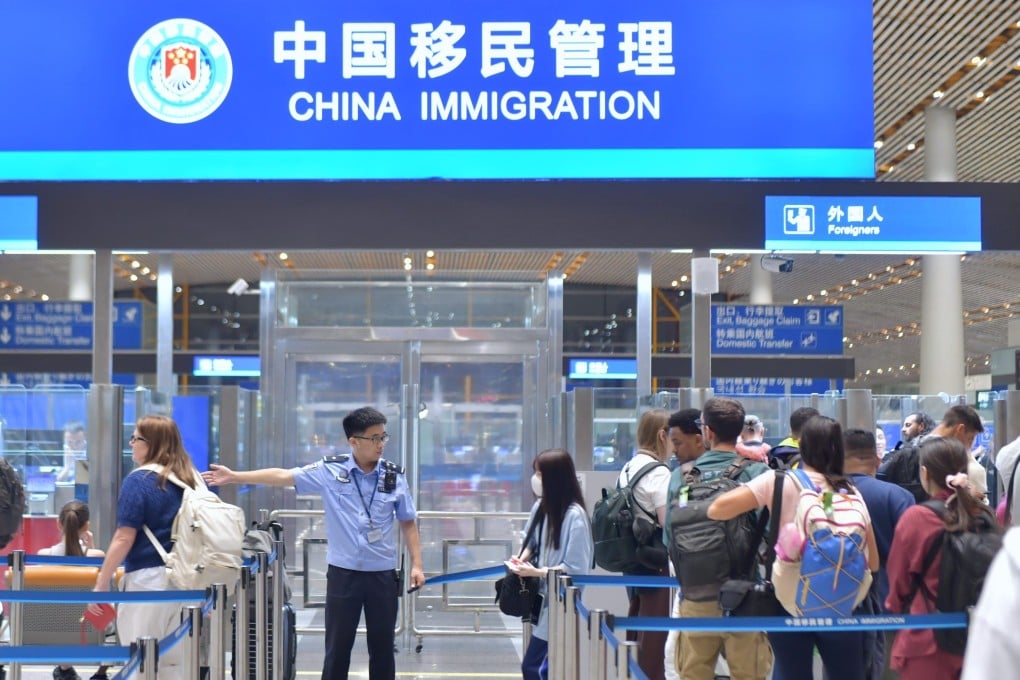
Li Mingbo, deputy dean of the Guangzhou Institute of the Greater Bay Area (GIG), said China must be more efficient in promoting its new K visas for young science and technology specialists from overseas, noting that the country lacked an immigration system tailored for hi-tech talent. “Although the US has tightened its visa policies, I think it still offers valuable lessons for China, particularly in attracting international hi-tech talent, an area where China remains relatively weak and overly conservative,” Li said earlier this month.
A public policy analyst says the US immigration system offers lessons for China. Photo: Xinhua
 
Tech self-reliance takes the stage at China’s World AI Conference

He said conflict-affected countries such as Ukraine, Russia and Iran were home to incredible tech talent, including top engineers and mathematicians looking for safer, better places to live. “China actually has an urgent need for certain technical professionals, and those countries have plenty of them,” Li said. “It would be great if we could bring them in through a technical immigration pathway, yet we currently lack relevant policies.”

Beijing aims to become a tech superpower by 2035, and views young talent as a cornerstone of that vision. In its latest five-year plan – covering 2026 to 2030 – China has pledged to “establish an immigration system for hi-tech talent” and “attract and cultivate outstanding talent from around the world”.

The pledge follows last year’s introduction of a new K-visa category, a scheme designed to draw young science, technology, engineering and mathematics, or STEM, professionals from overseas by offering streamlined entry, residence and employment options without requiring a local employer or inviting entity.

The United States, China’s main geopolitical rival, has long been a magnet for global talent. Its H-1B visas are widely used by tech companies to hire professionals and serve as a major gateway to permanent residency.

Data from the 2020 census showed that only 845,000 foreign nationals were living in mainland China, representing just 0.06 per cent of its overall population. By comparison, the US was home to 52 million immigrants as of June last year, accounting for about 15 per cent of residents.

But Washington has tightened visa policies for highly skilled foreign workers, including a recent proposal to scrap the 60-day grace period for H-1B holders after job loss. Li and a fellow GIG researcher submitted a proposal in December in line with Beijing’s push to attract foreign visitors and residents.

The proposal advocates for a unified identity authentication system that shares data across departments and platforms, creating a single identity framework for the visitors’ entire stay in China and eliminating day-to-day operational hurdles. They also suggested linking personal information to a unique permanent ID, rather than a passport number that changes upon renewal, for seamless access to services such as banking, accommodation, transit and work.

However, Li said he did not know how the proposal was progressing. Beyond simplifying work permits, residence visas and identity authentication systems, Li emphasised the need for an English-friendly environment to attract more foreign visitors and residents. He suggested standardising English translations on public signage and introducing English-language interfaces for ride-hailing and navigation apps.

 
What is the outlook for China’s fresh graduates in an already crowded job market? But Li warned that top-level efforts to attract foreign talent could face resistance from domestic public opinion, urging people to be more open-minded on increased immigration.
The debut of K visas in August last year triggered an online backlash in China, with many arguing the plan overlooked the country’s high youth unemployment and competitive job market.

Additional reporting by Fan Chen

Caroline Lin
Caroline Lin is currently an intern on the China desk and holds a master's degree in journalism from the University of Hong Kong.