
Greekcitytimes by Kosta Papadopoulos,
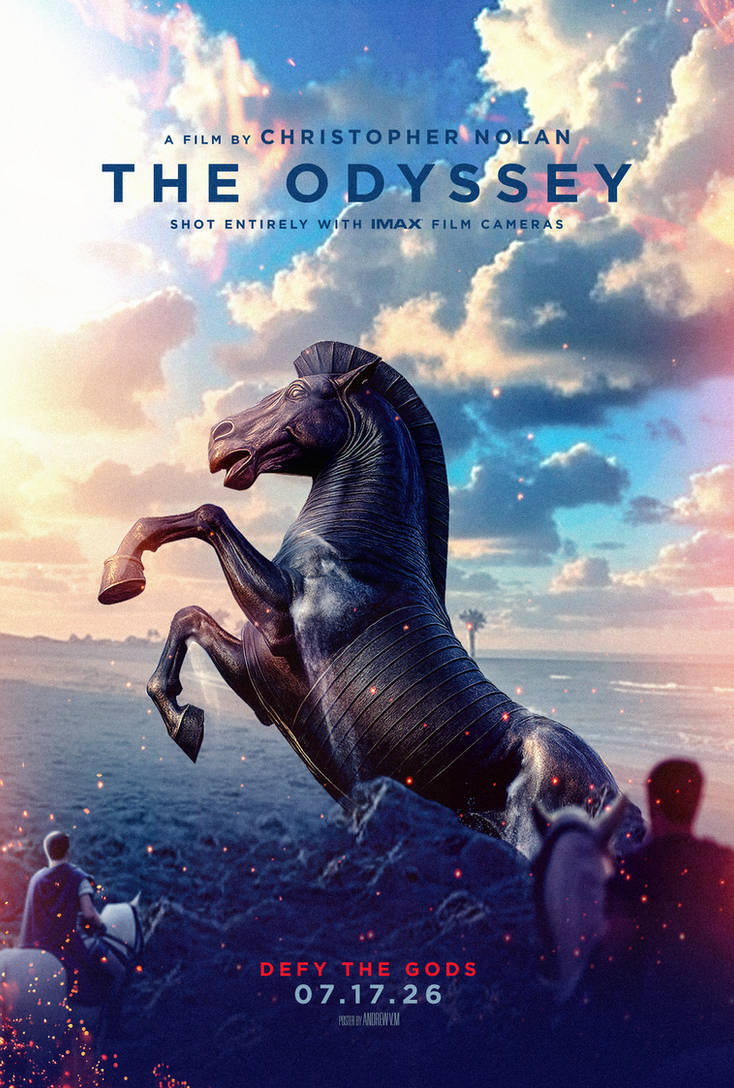
Christopher Nolan’s most in-depth discussion yet about The Odyssey has gone viral after viewers praised interviewer Zhong Shu for asking unusually philosophical questions that pushed the Oscar-winning filmmaker beyond traditional Hollywood promotion and into a deeper conversation about Homer, civilisation and the meaning of storytelling. Christopher Nolan talks narrative decisions, film critics and whether he Christianised The Odyssey
The interview spread rapidly across social media, with viewers praising Zhong Shu’s preparation, historical knowledge and willingness to challenge one of cinema’s most influential directors with questions rarely heard during film publicity campaigns. Rather than focusing on production details, casting or box office expectations, Zhong guided Nolan through a wide-ranging discussion about the Bronze Age Collapse, Greek philosophy, heroism, morality and whether ancient ideas still shape the modern world.
Many viewers described the conversation as a rare example of a filmmaker interview that explored ideas rather than promotion. Zhong Shu challenges Nolan on Homer, civilisation and decline
The interview began with Zhong comparing filmmakers to the bards of the ancient world, telling Nolan that just as Greeks knew Odysseus, Achilles and Agamemnon through Homer’s narratives, modern audiences know Batman, the Joker and Oppenheimer through his films. She then challenged Nolan’s darker interpretation of The Odyssey, asking whether his focus on collapse and catastrophe reflected the anxieties of the present era.
“If Homer was a bard of a civilisation on the rise, are you a bard for a civilisation at dusk?” she asked.
Nolan responded that his interest came from the historical distance between the Trojan War and Homer himself, arguing that Homer wrote about a lost civilisation that his own audience viewed as more advanced than their own. The director said the Bronze Age Collapse became central to his interpretation of the epic. “I became interested in that collapse, what they call the catastrophe—the Bronze Age collapse,” Nolan said.
He added that his experience making Oppenheimer influenced his approach. “Oppenheimer is very much a film about the end of the world—about the collapse of civilization, ultimately,” Nolan said. “So I definitely carried that sensibility into this adaptation of The Odyssey.”
Zhong questions Nolan over atonement and Greek values
One of the interview’s most widely discussed moments came when Zhong challenged Nolan over his introduction of atonement into The Odyssey. She argued that the concept does not exist in Homeric Greek culture or in the original epic, asking directly: “Did you Christianize The Odyssey?” Nolan rejected the idea that he intentionally imposed Christian theology on Homer, explaining that his focus was instead on xenia, the ancient Greek concept of sacred hospitality. He described xenia as “Zeus’s law” in the film and said it represented a principle of mutual respect that remains relevant today.
Zhong followed up by connecting the idea of atonement with the consequences of war, asking whether the relationship between Christian repentance and Greek xenia was ultimately about humanity’s response to conflict. Nolan said he believed the two concepts shared common ground because both examine what happens when fundamental moral rules are broken.
The challenge of adapting a story thousands of years old
Zhong also questioned Nolan about the difficulty of adapting one of the world’s most studied works of literature. She compared making The Odyssey to writing a doctoral dissertation on Plato or Aristotle, suggesting that filmmakers face enormous expectations when adapting a story that has been interpreted for thousands of years. “You chose the most difficult dissertation to write,” she told Nolan, referring to his decision to tackle Homer’s epic after the success of Oppenheimer. Nolan responded that even his original films exist within established cinematic traditions and are judged against previous works. He cited Memento as an example, explaining that while the film used an unconventional reverse chronology, it retained a familiar three-act structure.
Zhong explores hubris, greatness and modern audiences
The discussion then moved to one of Greece’s most famous concepts: hubris. Referencing Thucydides and the fall of Athens, Zhong asked whether Odysseus should repent for his pride or whether greatness itself requires a degree of confidence and ambition. Nolan argued that repentance does not necessarily repair the damage caused by hubris. “Hubris is tragic because it’s irreversible,” he said. Zhong then raised a broader cultural question: whether modern Hollywood has become uncomfortable with greatness and now demands that extraordinary figures apologise for their achievements. She asked Nolan how he approaches portraying greatness in an era that often questions powerful individuals.
Nolan responded that contemporary audiences expect heroes to display self-awareness. “The answer is yes, we do, or the audience rejects the greatness,” he said.
A conversation about gods, belief and modern mythology
In the final part of the interview, Zhong asked Nolan whether the gods of The Odyssey should be understood as real beings or as “noble lies” created by humanity. Nolan said that, from the perspective of ancient people, the gods represented reality rather than belief because they explained the natural world. “For me, the gods are real, but they are inside the people,” he said.
Zhong then drew a comparison between ancient Greek gods and modern superheroes, suggesting that both reflect humanity’s desire for larger-than-life figures. Nolan agreed with the comparison.
The viral response to the interview has highlighted the public appetite for deeper conversations about cinema, mythology and culture. While Hollywood interviews often focus on promotion, Zhong Shu’s discussion with Nolan became a broader examination of how ancient stories continue to shape modern ideas about heroism, civilisation and human nature.

