ΑΝΑΛΥΣΕΙΣ
OPINION / OBSERVER: Europe needs to end its China illusion before it’s too late

Global Times, Published: Jun 17, 2026
When G7 leaders gathered in recent days and placed "Chinese exports" back on the agenda, the summit exposed something more uncomfortable than a trade dispute: a fundamental breakdown in Western coordination.
Politico reported that the US was openly unwilling to wait for European alignment. US Trade Representative Jamieson Greer was blunt: "I'm not really going to slow my roll to wait for them to see if we can coordinate on something" The White House's message was equally unambiguous - Washington was already acting and would not pause for allies to reach consensus. The G7 leaders only went as far as acknowledging that a problem existed, then pushed all substantive decisions to the G20. That outcome was not evidence of European timidity. It was the predictable result of attempting to coordinate China's policy in a forum to which China does not belong.
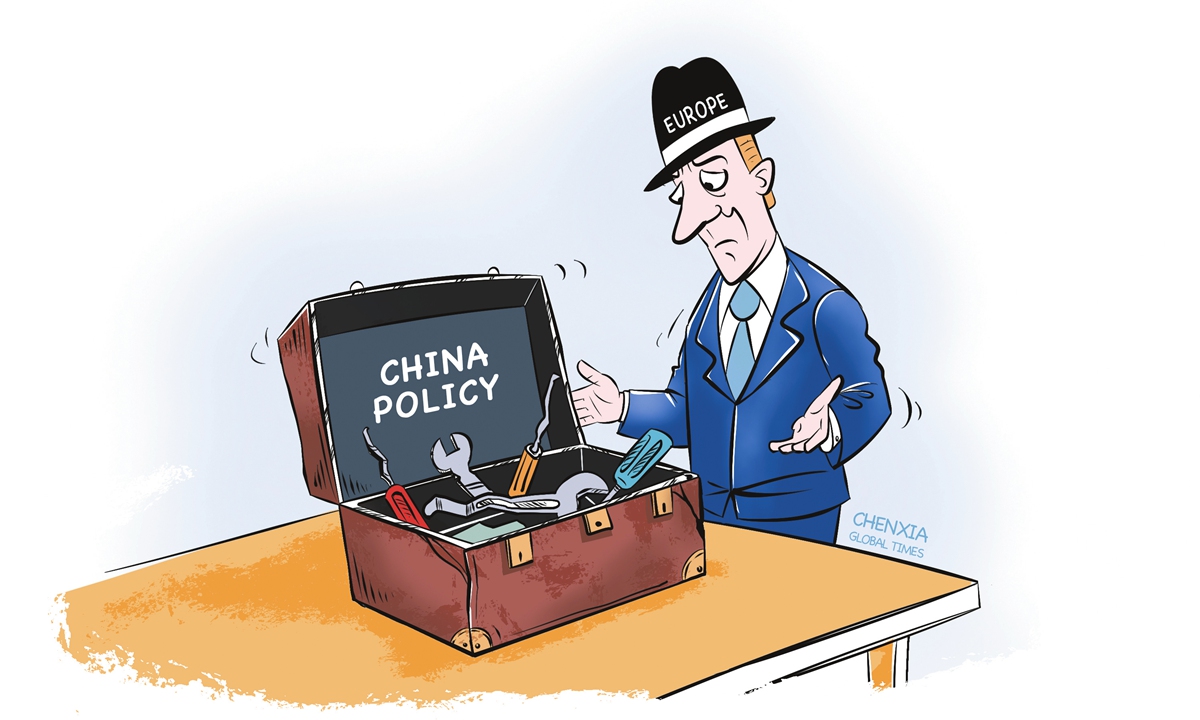
Illustration: Chen Xia/GT
Some analysts have nonetheless reached for a psychological explanation. Chad Bown, former chief economist at the State Department, argued that In Europe, "part of what slows them down is the fear of retaliation… and the fear that we don't have their back if they face that coercion and retaliation by the Chinese." The diagnosis sounds sharp. It is, in fact, profoundly wrong - or at least, profoundly incomplete. The narrative presupposes a contest of strength, as though the relationship between Europe and China were a match to the death.
EU Trade Commissioner Maros Sefcovic said the trade deficit with China was becoming "unsustainable." This is not a Europe paralyzed by fear, but one that has begun to harden its position - but finds itself without a reliable partner to coordinate with. Europe's deeper problem is a cognitive framework that has gone unexamined for three decades. The operating assumptions were these: China is an object of Western "engagement and reform"; it is a receiver of international rules, not a maker of them. From that premise, Europe cast itself as the exporter of norms, confident it could "manage" Chinese behavior through the levers of market access, multilateral inclusion, and technical standard-setting.
That world no longer exists. China's competitiveness in electric vehicles, solar energy, batteries, and advanced manufacturing reflects a systemic accumulation of industrial capability - not, as the "cheap dumping" framing suggests, a regulatory trick to be countervailed away. In rare earths and critical minerals, Europe is the one with a structural dependency on China, not the reverse.
Today's China, an autonomous industrial power with diversified trade, is fundamentally different from the China that joined the WTO a generation ago. China is fully capable and qualified to become an industrial partner of the EU. Applying outdated policy logic to it is a category error, not a matter of strength or weakness. A further misconception must be cleared away. China is not attempting to "defeat" Europe. This is not a contest. Beijing's position, stated plainly, is that one source of the bilateral trade imbalance is the European Union's own controls on high-technology exports to China.
The EU simultaneously laments its trade deficit with China, restricts technology transfers, and seeks to hold a moral high ground. In today's conditions, those three positions cannot coexist. The contradiction is not a negotiating posture - it is a symptom of a framework that no longer fits the facts it purports to explain. The summit's wider context makes this clearer still. Therefore, changing these illusions about China and genuinely sitting down to discuss how to solve these problems with China is the correct choice.
The earlier that reassessment is made, the sooner Europe will be able to build a relationship with China that is genuinely sustainable - grounded in accurate perception rather than inherited assumptions. The end of a 30-year illusion is never comfortable. But acknowledging it today remains considerably less costly than being forced to acknowledge it tomorrow.

yiota
Author’s Posts
-
Iraq’s Oil Lifeline Reopens — But Can Baghdad Trust Turkey for Even One Year?
Aug 11, 2026
-
Central Asia and Azerbaijan Extend Cooperation Across the Caspian
The Central Asia Times, 11 Augu...
Aug 11, 2026
-
Ποιοι Είμαστε
της Παναγιώτας Παπαρούνα
Ο μεγάλος ευρασιατικός μας κόσμος!
Της Παναγιώτας Παπαρούνα
Ιράν: Ο Μοτζτάμπα Χαμενεΐ προχώρησε σε αλλαγές κορυφής – Ετοιμάζεται για παρατεταμένη σύγκρουση