ΑΝΑΛΥΣΕΙΣ
Iran’s Possible Recognition of the Islamic Emirate of Afghanistan: a Strategic Outlook
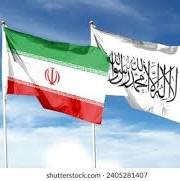
Special Eurasia 16 February, 2026 By Silvia Boltuc
Executive Summary: This report assesses the strategic implications of recent statements by Iran’s ambassador in Kabul, Alireza Bigdeli, regarding Tehran’s potential formal recognition of the Islamic Emirate of Afghanistan under the Taliban’ rule. It evaluates how recognition could consolidate an emerging Iran–Afghanistan–Russia economic axis, reshape regional trade corridors, and recalibrate Eurasian geopolitics beyond a purely political decision.
Key Takeaways
- Tehran’s potential recognition of the Taliban is a strategic security hedge designed to stabilise its eastern frontier and prevent Afghanistan from being used as a platform for hostile intelligence or militant activity.
- Deepening trade interdependence, energy exports, and border free-trade zones are embedding Afghanistan structurally into Iran’s economy, transforming geopolitical risk into geo-economic leverage.
- Recognition could integrate Afghanistan into a Russia–Iran–Eurasia connectivity framework, linking Chabahar and the Caspian to the International North–South Transport Corridor and accelerating a regional, non-Western stabilisation model.
Information Background
Iranian Ambassador Alireza Bigdeli has publicly confirmed that Tehran is engaged in discussions about the possible formal recognition of the Islamic Emirate of Afghanistan, stating there are no internal obstacles within Iran to such a move. He described relations as already close and fraternal, with cooperation expanding across political, security, and economic sectors despite the absence of official recognition. He also warned against foreign interference in Afghanistan and emphasised regional cooperation as the preferred mechanism to mitigate destabilisation risks.
Parallel to diplomatic messaging, economic engagement has intensified. Iran is currently Afghanistan’s largest import partner, with bilateral trade exceeding USD 3.4 billion, Afghan imports far outweighing exports.
The Dugharun crossing in Razavi Khorasan and the Mahirud border in South Khorasan have become pivotal commercial arteries. In 2023, Dogharoun was designated as a Free Trade–Industrial Zone on the Iran–Afghanistan border, directly connected to Afghanistan’s Herat Province. Iranian authorities have also proposed establishing a jointly managed free trade or special economic zone at the zero-point border area, a project under consideration but not yet fully operational.
Energy diplomacy has advanced through high-level visits, including that of Iran’s Deputy Oil Minister Seyed Ali-Mohammad Mousavi, who discussed with Afghan Commerce Minister Nooruddin Azizi and Deputy Minister of Mines Abdul Rahman Qanit expanding petroleum and liquefied gas exports, refinery modernisation, and mineral investment. Taliban officials have requested preferential pricing and transit facilitation.
At the political level, Taliban spokesperson Zabihullah Mujahid has publicly expressed solidarity with Iran in case of foreign aggression, signalling strategic alignment.
Iran is structurally linked to Russian Caspian ports through agreements between the Iranian Mazandaran Free Zone and Anzali Trade-Industrial Zone and Russian free zones in Dagestan and Astrakhan. During a recent regional forum, Russian representatives proposed facilitating Afghan trade via Astrakhan, reinforcing the emerging integration dynamic. Notably, Russia remains the only state to have formally recognised the Taliban government.
Geopolitical Scenario
Tehran’s potential recognition of the Islamic Emirate must be interpreted as part of a broader strategic realignment rather than a purely bilateral decision. Tehran faces an altered regional environment marked by its strategic setback in Syria, sustained Israeli covert operations, Sunni extremist threats emanating from eastern corridors, and mounting pressure from the United States. In this context, Afghanistan represents both a vulnerability and an opportunity.
Security logic dominates. Iran’s eastern frontier has historically been a conduit for narcotics trafficking, militant infiltration, and sectarian violence. By institutionalising relations with the Taliban, Tehran seeks to convert a historically unstable border into a managed security perimeter.
Formal recognition would likely facilitate intelligence-sharing mechanisms, border control modernisation, and counterterrorism coordination against groups hostile to both Tehran and the Taliban, including the Islamic State Wilayat Khorasan (ISKP). Given Tehran’s acute sensitivity to Sunni militancy inside its territory, pragmatic engagement with the Taliban—despite ideological divergence—serves immediate defensive priorities.
Recognition functions as a preemptive hedge against external destabilisation scenarios. Tehran is acutely aware that Afghanistan has historically been used as a theatre for proxy competition. Bigdeli’s warning about foreign interference reflects concern that adversarial actors—potentially including Western or Israeli services—could exploit Afghan territory to undermine the Islamic Republic. Recent reports of Afghan nationals being repatriated from Iran after alleged recruitment by foreign intelligence services reinforce Tehran’s perception of vulnerability. Recognition thus becomes a mechanism to bind Kabul into a tacit non-hostility pact.
Economic drivers are also central. Afghanistan is a captive energy market dependent on imports. Expanding petroleum and gas exports stabilises Iranian border provinces economically and offers sanctions-resistant revenue streams.
Furthermore, Iranian private sector interest in Afghanistan’s mineral sector—particularly copper, iron and lithium—aligns with Tehran’s objective to diversify its economic partnerships eastward. For Kabul, Tehran offers accessible transit routes and technical expertise; for Iran, Afghanistan offers strategic depth and economic leverage.
The trade data are therefore strategically significant. Afghanistan’s structural dependence on Iranian imports gives Tehran leverage and embeds Kabul economically into eastern Iran’s border provinces.
The Dogharoun Free Trade–Industrial Zone represents more than a commercial facility; it is a geo-economic instrument designed to institutionalise cross-border integration. If the proposed joint zero-point special economic zone becomes operational, it would create a semi-integrated economic space where customs, logistics, and industrial processing could be co-managed, reducing transaction costs and deepening interdependence. Such integration reduces the likelihood of border destabilisation and transforms what were historically friction points—water disputes, smuggling corridors—into managed economic assets.
At the macro-regional level, Iran’s existing connectivity with Russian Caspian ports, particularly Astrakhan, offers Afghanistan access to northern maritime outlets without reliance on Pakistan.
Under the previous Afghan administration, Kabul signed a trilateral agreement to use the Port of Chabahar for trade diversification. A formal Iranian recognition of the Islamic Emirate could reactivate and expand this framework, linking Chabahar southward to the Indian Ocean while simultaneously connecting northward through the Caspian to Russia.
Such alignment would potentially insert Afghanistan into the International North-South Transport Corridor, a multimodal network linking Russia, the Caucasus, Central Asia, Iran, and onward to India. If Kabul is integrated into this corridor through Iranian territory and Russian facilitation via Astrakhan, Afghanistan transitions from a landlocked liability to a transit node within a Eurasian logistics chain. For Moscow, this reduces Western leverage over regional supply routes; for Tehran, it monetises geography under sanctions; for Kabul, it mitigates isolation caused by limited formal recognition.
The shift in the Iranian approach also reflects ideological pragmatism. Under Raisi, Tehran’s insistence on an inclusive Afghan government aligned with its traditional narrative of defending Shia minorities and multi-ethnic participation. The current administration’s silence on inclusivity suggests a prioritisation of state-to-state stability over normative positioning. This does not necessarily indicate indifference to Afghanistan’s humanitarian conditions, but rather a calculation that isolation has failed to moderate Taliban behaviour. Engagement may provide more leverage than rhetorical distance.
The wider Eurasian context matters. Russia’s recognition sets a precedent that weakens the stigma around formal acceptance. Moscow’s calculus centres on countering Western influence and stabilising Central Asia. China seeks security guarantees for Xinjiang and access to mineral resources. Turkey pursues influence through infrastructure and diplomatic mediation. Central Asian states prioritise border security and trade corridors. None of these actors benefit from a failed Afghan state. Iranian recognition, therefore, would align with a regional trend toward de facto normalisation, reinforcing a Eurasian-led approach to Afghan stabilisation that sidelines Western conditionality frameworks.
The US factor introduces a paradox. Should Washington escalate against Iran to the point of regime change, a pro-Western government in Tehran could adopt a sharply different Afghanistan policy, potentially aligning against the Taliban. From Kabul’s perspective, therefore, maintaining strategic solidarity with the current Iranian system is a form of insurance. Mujahid’s statement of solidarity suggests that the Taliban view Iran not only as a neighbour but as a partner in resisting perceived Western interventionism. Recognition would formalise this tacit alignment.
However, the decision carries risks. Iran’s long-term influence among Afghan Shia communities could erode if Tehran is seen as legitimising a regime accused of systemic repression. There is also reputational cost within segments of Iranian society that remain sensitive to the treatment of Afghan refugees and sectarian solidarity narratives. Moreover, overt recognition may complicate Tehran’s balancing act with Gulf Arab states, some of which maintain cautious engagement but avoid formal endorsement.
For regional actors, formal Iranian recognition would likely accelerate normalisation dynamics. Central Asian states may feel more confident in expanding technical cooperation. China could interpret the move as additional assurance of a stable western periphery. Conversely, Western governments may perceive it as a consolidation of an anti-Western bloc, reinforcing geopolitical polarisation.
Conclusions
Iran’s consideration of formal recognition of the Taliban’s Islamic Emirate represents a pragmatic recalibration rooted in security imperatives, economic opportunity, and regional realignment rather than ideological convergence. In a context of heightened external pressure, eastern border vulnerabilities, and shifting Eurasian power balances, Tehran appears prepared to prioritise managed stability over normative conditionality.
Should recognition proceed, it will signal the consolidation of a regional consensus that Afghanistan’s stabilisation must emerge from engagement rather than isolation. The move would strengthen Iran’s eastern security architecture, deepen economic interdependence, and anchor Afghanistan more firmly within a non-Western geopolitical orbit, while introducing reputational and strategic trade-offs that Tehran appears willing to accept in exchange for predictability and influence.
Written by


yiota

News
Technology
About Us
Download Our Mobile App