
Eurasianet, Paul Bartlett Jun 10, 2026,
Uzbek success spurring neighboring Kazakhstan to improve. Central Asian soccer is having a moment, as Uzbekistan makes its debut at the FIFA World Cup tournament, which begins June 11.
When Uzbekistan, which is currently ranked 50th in the FIFA rankings, kicks off its World Cup campaign against Colombia in Mexico City on June 17, it will mark the first time a country from Central Asia has qualified for the finals of soccer’s most prestigious event. Uzbekistan came close to qualifying during several previous World Cup cycles. The national team’s progress this time around was helped by the expansion of the number of teams in the tournament from 32 to 48. But that doesn’t tell the whole story.
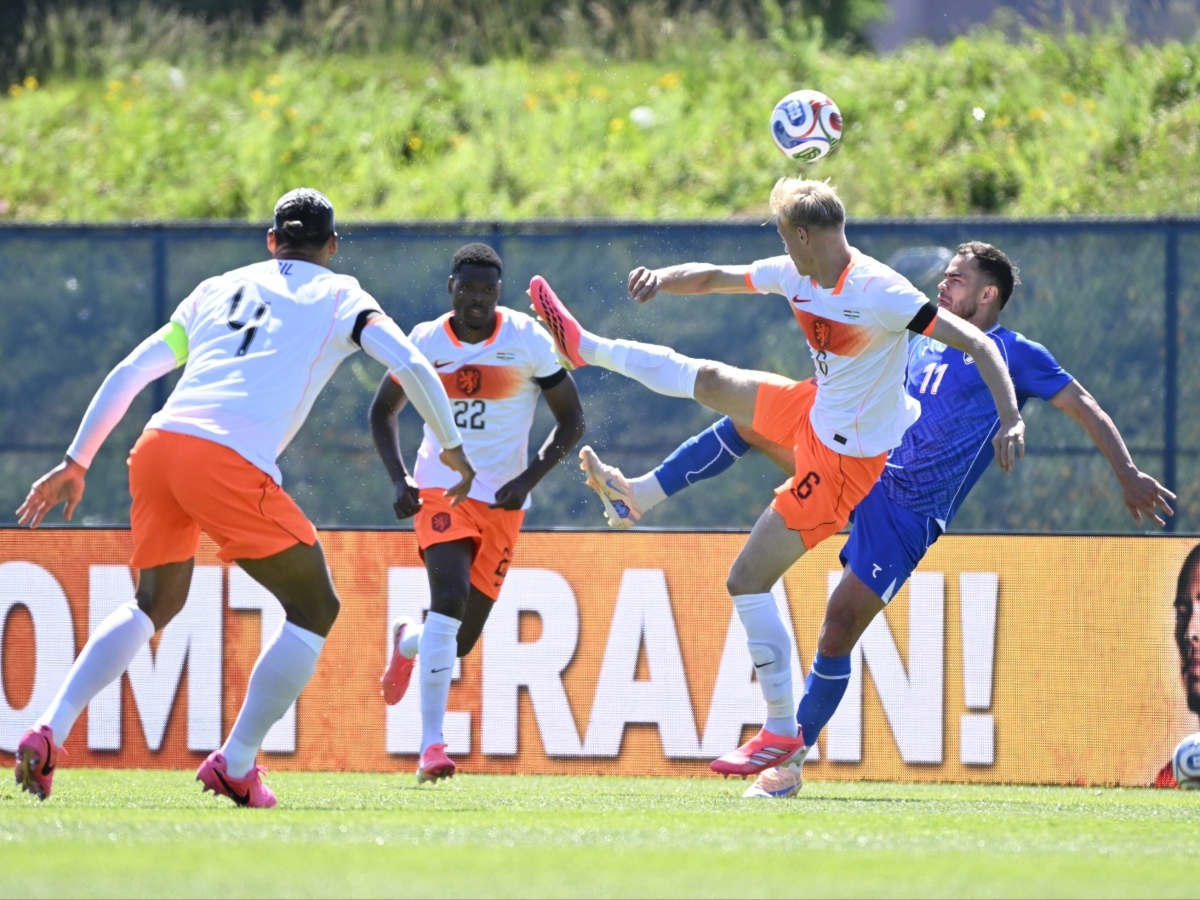
Uzbek (blue) and Dutch players enjoy a friendly in New York on June 7 ahead of the FIFA World Cup first whistle on 11 June. (Photo: ufa.uz)“The reason is simple,” Sunnatillo Samatov, an Uzbek football content creator, told Eurasianet. “Over the past three years, we have faced Iran six times — a virtually constant participant in the World Cup — and have not suffered a single defeat.” “This is direct proof that even if the tournament format had remained limited to 32 teams, we would have, with a high degree of probability, still secured a spot at the World Cup.”
According to Samatov, the team’s rise can be attributed to former manager, Srečko Katanec from Slovenia, who was responsible for improving the team’s defense. “Our team had previously been able to play attacking football, but its defense always had problems. The first thing Katanec did upon joining the team was build a solid defense,” said Samatov.
Katanec stepped down due to health issues in 2025. He was initially replaced by Uzbek coach Timur Kapadze, who secured qualification for the national team, known to fans as the White Wolves. Last October, Kapadze was replaced by experienced Italian coach Fabio Cannavaro, a World Cup winner as a player with Italy in 2006. Many soccer fans in Uzbekistan aspired to attend the tournament, hosted by Canada, Mexico and the United States, despite the high costs involved and the difficulty of obtaining visas. “It’s my dream, we’ve been waiting for so many years for this – to see America and to see soccer. Now we just have to win!” Usman Abdunazarov, a 33-year-old Tashkent-based musician and sound producer, told Eurasianet.
Kazakhstan, Uzbekistan’s northern neighbor, also has ambitious plans to up its game and become a regular at international tournaments. But this year, Kazakh officials and fans will be eyeing Uzbekistan’s tournament appearance enviously. Kazakhstan has opted for a more difficult path for qualification for a World Cup tournament. While Uzbekistan plays in the Asian Football Confederation (AFC), Kazakhstan in 2002 chose to switch from the AFC to the Union of European Football Associations (UEFA), European soccer’s governing body. Sporting officials cited the chance to play against stronger European opposition, while highlighting the potential financial benefits of European club competitions, such as the Champions League.
The money is significant. This season, Almaty’s FC Kairat qualified for the league stage of UEFA’s Champions League for the first time. Despite finishing bottom of the table with just one point, Kairat still pulled in around $25 million by virtue of qualifying for the group stages, significantly more than it could have earned in AFC-sponsored elite competitions. “Europe is a huge money-spinner. UEFA solidarity payments and prize money for participating in European competitions, even in the Conference League, are several times higher than revenues in Asia,“ Arman Tynymov, an editor who writes about Kazakh soccer for the Matchkz sports site, told Eurasianet.
Playing against Europe’s elite also brings benefits for the national team, according to Tynymov. “The Kazakhstan national team's progress in recent years is a direct result of being accustomed to playing against the best. A return to Asia could lead to stagnation as the average pace is lower there,” Tynymov warned.
Kazakhstan, currently ranked 110th in the FIFA rankings, has never qualified for the final stage of any major tournament. But there are hopes that this may change when qualification play begins for the next World Cup finals in four years’ time. “The 2030 World Cup: This is the main strategic goal,” said Tynymov. The long-term plan is that “the team should be perceived as a regular contender to advance from the qualifying groups, not as an outsider.”
To help achieve this ambitious goal, the Kazakhstan Football Federation recently appointed Scott Munn as its General Secretary. Munn was formerly Chief Football Officer at the English Premier League’s Tottenham Hotspur, who won last season’s UEFA Europa League competition. In recent years, soccer in Kazakhstan has undergone a shake-up with a number of clubs going into private ownership. Officials are also emphasizing grassroots initiatives to nurture the future generation of soccer players.
For now, however, it is the Uzbek team that holds the spotlight for Central Asian fans. Samatov, the Uzbek football content creator, believes Uzbekistan faces a tough challenge to move beyond the group stage of the tournament. “Considering our group includes such strong opponents as Portugal and Colombia, I really hope we can advance to the playoffs from third place,” he said. “Advancing from such a tough group wouldn't be a bad result for a debut appearance.”
Paul Bartlett is a journalist based in Almaty.