
Eurasianet Mar 3, 2026
A major roadblock for efforts to carve out a route to the sea. Largely overlooked because of the burgeoning conflict in the Middle East, “open war” has erupted between Pakistan and Afghanistan’s Taliban leadership. The fighting all along its southern rim represents a major setback for Central Asia’s global trade agenda. The Pakistani-Afghan conflict shows no signs of easing after almost a week of fighting.
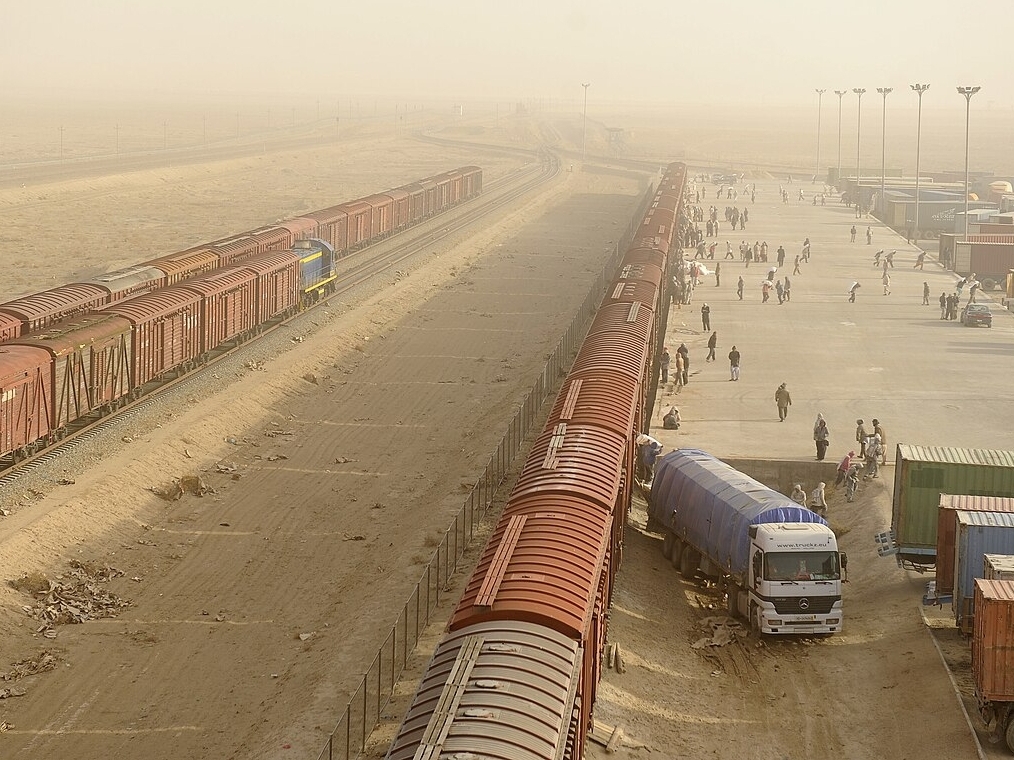
On March 2, Pakistan conducted air strikes on a key military site near Kabul, Bagram Air Base, which served as the hub for US military operations during the 20-year American presence in Afghanistan. Taliban officials claimed their forces conducted counter-strikes against Pakistani military targets. Numerous firefights between ground forces have been reported along the two countries’ roughly 1,600-mile frontier. Both sides have claimed their forces have inflicted heavy casualties on the other. A Taliban government spokesman has claimed at least 110 Afghan civilians have been killed in Pakistani air raids conducted over the past five days. Pakistani complaints about continuing Taliban support for a radical Islamic group active in Pakistan, known as the TTP, are seen as the catalyst for the full-blown conflict. The warfare is quickly undoing months of painstaking diplomacy by Central Asian states to foster closer trade relations with both combatant nations. Afghanistan and Pakistan are viewed by Kazakhstan, Uzbekistan and other landlocked regional states as their fastest and most efficient potential trade route to a seaport, access to which would multiply export growth. Since December of 2025, the presidents of Kazakhstan, Kyrgyzstan and Uzbekistan have all paid groundbreaking visits to Pakistan, seeking to move past decades of distrust rooted in the Soviet occupation of Afghanistan in the 1980s, and forge stronger trade ties. During those visits, Central Asian leaders laid the groundwork for the development of a trans-Afghan rail link connecting the region to Pakistan. Kazakh and Uzbek officials also reached tentative deals to develop terminals at the Pakistani port of Karachi, as well as gain access to other ports at Qasim and Gwadar, which is operated by China. They likewise explored the possibility of developing a dry port at Chaman, a key overland trade point on the Pakistani-Afghan border. Over the near term, Central Asian states articulated goals of achieving exponential growth rates in trade with Pakistan within a few years. Meanwhile, Central Asian states have stepped up their engagement with the Taliban. On February 17, diplomats from Kazakhstan, Kyrgyzstan, Tajikistan and Uzbekistan met with the aim of formulating a unified diplomatic approach toward the Taliban to accelerate trade and connectivity. One attendee said improving trade ties with Afghanistan was “critically important” for Central Asia. Uzbekistan has taken the lead in Afghan engagement. In late December, Tashkent reopened for individuals the cross-border bridge at Termez that had been closed since the Taliban returned to power in 2021. Bilateral trade grew over 50 percent in 2025 compared to the previous year, reaching $1.5 billion. In late February, officials from both states expressed a goal of increasing bilateral trade volume to $5 billion within five years. Now, however, all hopes for skyrocketing growth in trade and expanding connections appear to be on hold. “The outbreak of the Pakistan-Afghan war has effectively set back the implementation of all these agreements,” a regional expert, Teimur Atayev, wrote in a commentary published March 2 by Caliber, an Azerbaijani news outlet. He was referring to MoUs signed during recent Central Asian presidential visits to Islamabad. Stanislav Pritchin, a Central Asian expert at Russia’s Institute of World Economy and International Relations, said in an interview with a Kazakh news outlet that Central Asian states will need to adjust their trade expectations. The longer the Pakistani-Afghan conflict drags on, the longer the dream of Central Asian nations breaking out of their landlocked status will be deferred. “In the long term, it is likely that it will not be possible to implement and achieve the targets that were laid down when initiating the projects,” Pritchin said.
